
 The team of researchers in robot technology Veda Center and the firm specializes Nippon Tmsuk have submitted a vehicle for intelligent handicapped-person, a concept that seeks to reverse a wheelchair and solves many problems. This device, which resembles a sort of futuristic scooter shortened, allowing a disabled person to climb over the back, by dragging on the seat height adjustable. The plate then his chest against a retaining plate, docks with a handlebar and can lead, via a joystick side, this means of locomotion power.
Author Archives: admin
The Campus Party in Valencia this therapeutic robots of the future
 Medicine is increasingly calling the robot to explore new therapeutic approaches. We have already seen the case Cosmobot the robot communication aid for children, and the use of Keepon, the robot therapist to interact with children with delays and / or mental disorders. Continue reading
The robot Spirit on Mars seen from space!
 Two years ago, the robot of Exploration Mars, Spirit, landed in the crater Gusev. The rover marked its first anniversary on Mars (687 days land) in November 2005 (see our news ). Shortly before the anniversary, the camera from the orbiter Mars Global Surveyor (AMS) carried a photograph covering an area d ‘about 3 km of side pointing to the location of the robot in the region of Columbia Hills. Continue reading
Robots who invent a language
 The EPFL (Ecole Polytechnique Federale de Lausanne) will definitely not stop to talk to her, in robotics. A team of Swiss researchers consisting of robotics Dario Floreano, Sara Mitri, Stéphane Magnenat and Laurent Keller of the biologist, has developed a simulation composed of virtual robots that can understand what factors determine how communication arises in the evolution of social organizations. The virtual robots are used compounds of evolutionary algorithms, which enable them to respond and adapt to their environment. Communication is critical to the ecological success of social organizations. But the study of the evolution of communication is made extremely difficult for the absence of trace fossils of communication as it existed in the primitive social animals.
To perform their study, the researchers then used the simulation (the simulator is Enki, a 2D simulator in C + +). They studied the behavior of hundreds of colonies composed of 10 individuals. The development of these settlements has continued for 500 generations. Once the robot “virtual” presented interesting features, the program was transferred to real robots, this time.
Presentation of experiences
The robots are placed in an unfamiliar environment, provided a reserve of food and a pool of poison. Each robot is able to move and differentiate the poison food. Each robot has basically a simple program, encoding settings variables in a “genome”, a sort of database that can change over generations. The parameters in question encode for example the importance of altruism, or the spirit of competition. When the “reproduction”, the most powerful individuals will be selected, and will produce a new generation by passing each genome, which in theory combine the benefits of both parents.
According to Laurent Keller, “under certain conditions, a sophisticated communication has developed. We have seen colonies use lights to indicate they had found food and others reported the poison.” The use of primitive codes could well prove to be the root of language.
Brazil: train robots to compete in the football World Cup in Austria
 SAO PAULO (Brazil) (AFP) – Seven students fanatical Brazilian electronics work on the ground to improve the offensive and defensive strategies of their robots compete in the “Robocup 2009” which begins Monday in Austria. They run, dribble and mark: these robots play soccer through the development of artificial intelligence is not only used in major laboratories world but also in fairs Ignaciana University Educational Foundation (EIF), Sao Bernardo dos Campos, in the southern state of Sao Paulo.
They interact on a synthetic grass with a golf ball, microchip and high technology to prepare their team of six robots who will travel Saturday to Graz (Austria) to compete in robotics competition “Robocup football from June 29 to July 5. More than 400 teams from forty countries participate in this sort of World Cup for robots. Brazil will be represented by the team of the FEI and the Federal University of Rio Grande do Sul.
The FEI team consists of six robots, seven students in computer science and electrical engineering and two teachers, but only five students will travel with the “players” because of high costs of travel.
Young people work tirelessly to refine devices robots. Mechanics has been improved in the last minute, as Eduardo Garcia, 28, and Gabriel Francischini, 20, are they the final touches, screwdriver in hand.
The system allows the robots to play soccer alone is simple, according to these experts: high-precision cameras filming from above the football field and send the information to a computer. The computer program analyzes the situation, defines what will be happening next and sends the signal via radio to the robot receives the order and executes it.
Each “player”, 15 cm high and 30 cm in diameter has sensors for “foot” that helps to know if he has the ball.Five robots are the team owner and a sixth will remain on the bench in case of “injury” of a player during the match two halves of ten minutes each. Each robot has position: striker, defender, midfielder or goalkeeper. The program can calculate the force of the shot on goal or pass and the speed at which the players move, “says José Angelo Gurzoni, 28 years.
The FEI team is three time champion Brazil in the category “very small” (very small) but play the Robocup in that of “small size” (small).
For developing, it took many hours without sleep, money and collaboration with foreign universities. Students work with a computer program and the mechanisms of American Studies centers have shared with them.
Engines precision robots have been purchased in Austria, plates and electronic parts are Brazilian and high definition cameras have been ordered from a factory in Germany. All investments have come from the coffers of the university. Of the 25 teams competing in the category “small size”, Brazil in particular feared five, including Thailand, defending champion. So far “no Brazilian team has won the Match” for the Robocup says Gurzoni. But “the idea of this type of competition is primarily to generate knowledge and share with other universities,” says he.
Neural Networks Can Improve wind farm forecasts
 Researchers from the University of Alcala and the Complutense University in Madrid have invented a new method for Predicting the wind speed of wind farm aerogenerators … using knowledge generated from systems that simulate the workings of animals’ nervous systems. A combination of weather forecasting models and artificial neural networks, the New Method Enables researchers to calculate the energy that wind farms will produce two days in advance.
Recent advances in medical robotics: Projects MARGIN, GABIE and IRAS
 Research in medical robotics have intensified in recent years, supported by several national incentives (Robea program, ACI and RNTS * *) and European. The areas most promising short-term tele-ultrasound robot (OTELO projects [1] and B [2]), and interventional radiology (IRAS project [3] Robea). In the longer term, the minimally invasive endoscopically should benefit from the most recent advances in robotics in terms of perception, decision and action. Continue reading
Robots: what uses for professionals?
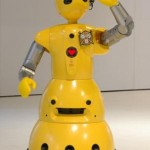 If robots have largely proven their ability to replace humans in the industrial field, where they perform tasks without flinching the most menial or repetitive more rigorously, we reserve the robotics still nice surprises in the field of business. Around the globe, teams of researchers working to demonstrate that both a priori overcome, the machine is often able to supplement or even replace humans. Continue reading
The first festival of robots in Mantes-la-Jolie
 Robotics and Mechatronics will honor the first festival of robots for the general public, academics and professionals. A rally around the robot through the robot competitions, conferences and workshops, exhibitions and entertainment. This national gathering, an initiative of Mantes-la-Jolie, aims to raise public awareness of robotics and its integration Continue reading
The CNRS, guardian of robotics
 Humanity is at the dawn of the robotics era. The final verdict is that of Philippe Coiffet, one of the founding fathers of robotics in France, now director of research at the CNRS Laboratory Robotique de Versailles (LRV) and writer. However, significant scientific advances of this major emerging discipline has undergone major changes. Continue reading