
 Although NASA spends most of its budget for space flight in human beings, there were many robotic missions. In 1962, the Mariner 2 mission was launched and became the first spacecraft to pass near another planet (Venus in this case).
The missions Ranger, Surveyor and Lunar Orbiter were essential to discover the nature of the lunar surface before trying to send astronauts. After the two Viking probes landed on the surface of Mars and have returned color photos of Earth. Perhaps more impressive were the Pioneer and Voyager missions that have visited Jupiter, Saturn, Uranus and Neptune. Having lost the moon race, the USSR has changed its approach. On 17 July 1975, Apollo 18 spacecraft docked to the Soviet Soyuz 19, in the Apollo-Soyuz project. Although the Cold War has continued until the 1990’s it was an important moment in the history of NASA, and international collaboration that is commonplace today began with this mission.
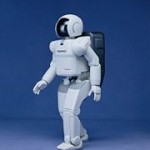
The first space station of the USA, Skylab, was built in the late 1970.On robot called a mechanical device automatically performing tasks generally considered dangerous or difficult for humans. The development of electronics and information technology allows treatment increasingly complex.
The definition of what is recorded or not robot varies among countries. In Japan, for example, this category includes unlike the France number of machine tools programmable. Despite their high cost at the time (for lack of powerful microprocessors mass-produced), robots have become very quickly, the early 70’s, for certain tasks like painting body automobiles, air toxic fumes.

 Liftoff of a Delta II rocket and its NASA payload, the Wide-field Infrared Survey Explorer (WISE), has been delayed 24 hours. At the soonest, launch now will be Saturday, Dec. 12, during a launch window that extends from 6:09:33 to 6:23:51 a.m. PST (9:09:33 to 9:23:51 a.m. EST). The delay allows the launch team additional time to troubleshoot a technical issue. During final systems checks of the Delta II rocket Wednesday in preparation for flight, an anomaly in the motion of a booster steering engine was detected.
  A mission to determine if robots, like spiders, they can build complex structures in space, will be launched in January 2006 according to ew Scientist magazine. The spider bots could build large structures from a “web” released from a larger spacecraft. The engineers behind the project plan to eventually construct colossal solar panels for satellites that will transmit solar energy back to Earth. The satellites could reflect and concentrate the sun’s rays on a power receiving station on Earth or perhaps in the form of microwaves.